AI Films Need More Than Beautiful Images
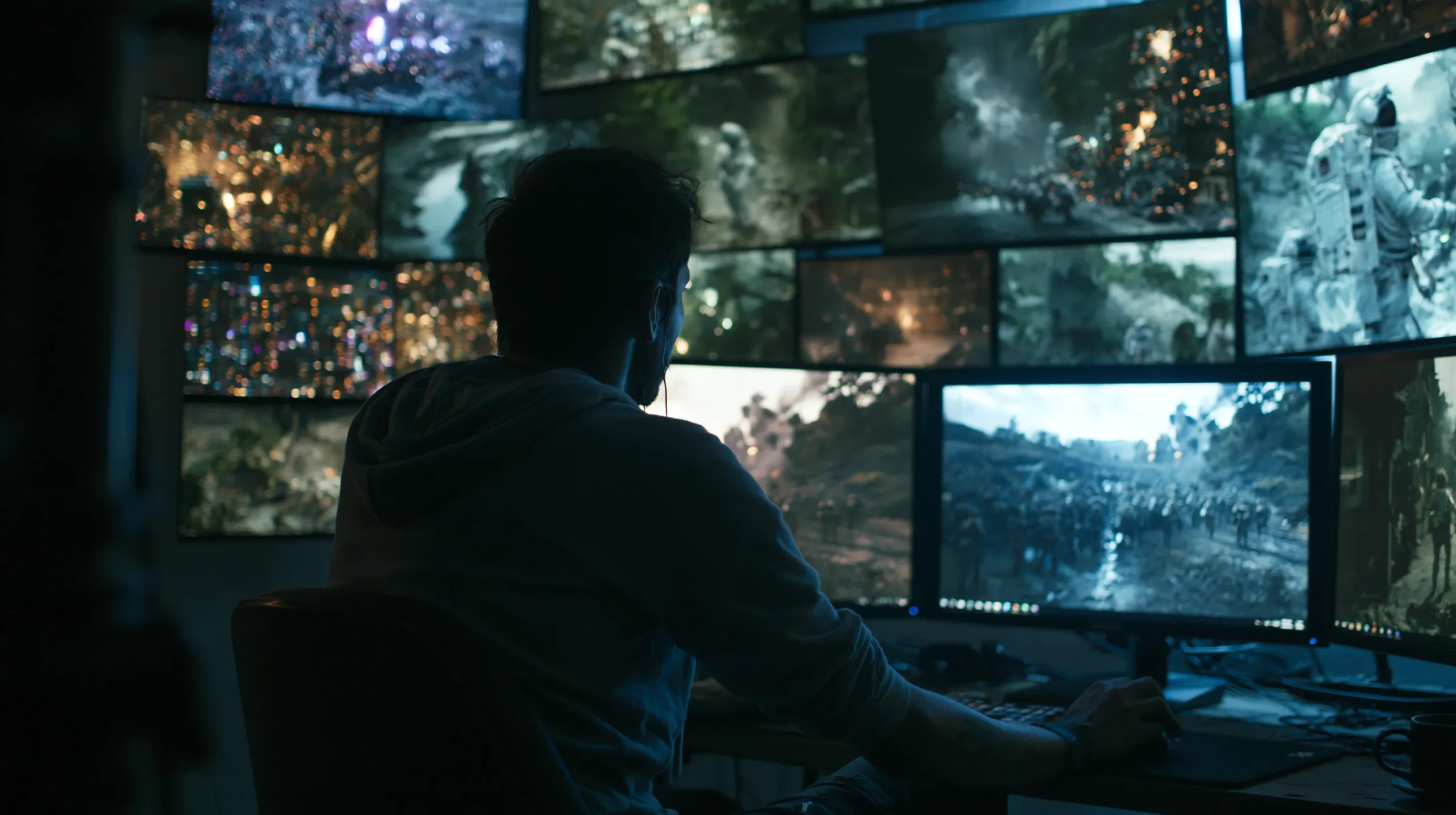
AI films are becoming easier to make.
That does not mean they are becoming easier to make well.
A creator can now generate a glowing city, a lonely astronaut, a medieval battlefield or a creature standing in the rain. The image may look impressive. It may even feel expensive. But a strong image is not the same thing as a strong film.
Cinema needs more than visual impact.
It needs rhythm, intention, atmosphere, story and direction.
This is one of the most important ideas in AI filmmaking. As the tools become more powerful, the creative challenge moves somewhere deeper. It is no longer only about creating something that looks cinematic. It is about creating something that feels directed.
Beauty is only the beginning
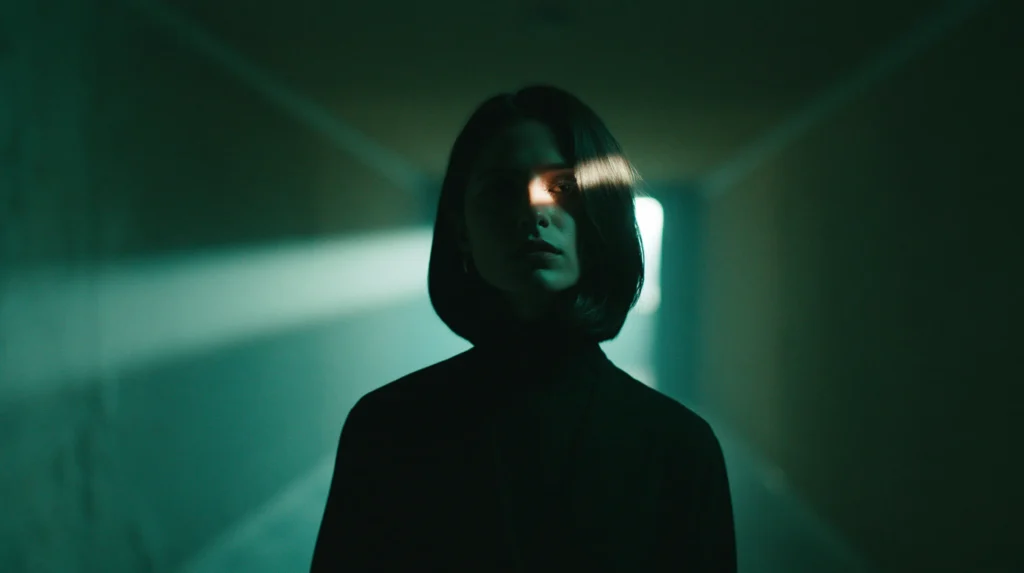
A beautiful image can open a door.
It can make someone stop scrolling. It can suggest a world. It can create curiosity in a second.
But beauty alone does not hold attention for long.
A shot of a giant city under purple clouds may look impressive. A warrior walking through fire may feel dramatic. A spaceship above a ruined planet may create scale. These images can be powerful, but they need a reason to exist inside the story.
The viewer needs to feel that something is happening beyond the frame.
A city should feel like people live there. A warrior should carry history. A spaceship should suggest a mission, a failure or a threat. A close-up should reveal more than a face. It should reveal pressure.
That is where AI filmmaking starts to become cinema.
A film is a relationship between images
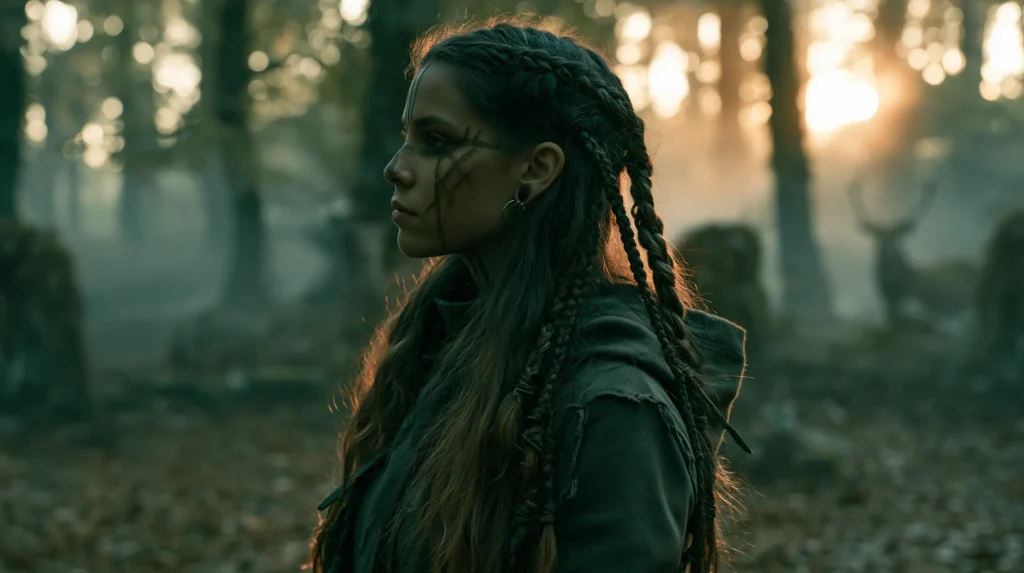
Cinema is not built from isolated images.
It is built from relationships.
A wide shot makes a character feel small. A close-up makes us search their face. A slow camera move can create tension. A cut to silence can change the emotional weight of a scene. A repeated visual motif can make a world feel connected.
These choices matter because they guide the viewer’s attention.
A film is not only what appears on screen. It is how one moment leads to the next.
This is where many AI videos still struggle. They may have striking images, but the images do not always speak to each other. A scene can look epic and still feel empty. A trailer can have dramatic shots and still feel disconnected.
The problem is not the tool.
The problem is the absence of cinematic thinking.
AI needs direction, not decoration
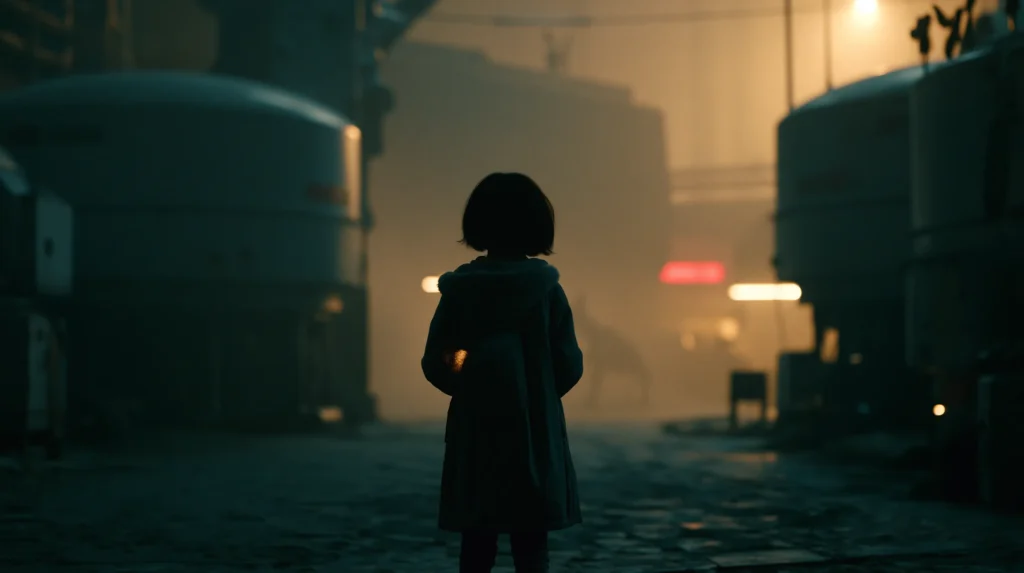
When images become easier to generate, decoration becomes tempting.
More light. More smoke. More detail. More particles. More scale.
That can create a strong first impression, but it can also hide a weak idea.
A film does not become cinematic because everything glows. It becomes cinematic because the visual choices serve emotion, story and point of view.
A dark corridor can be more powerful than a giant battlefield if the viewer understands what is at stake. A quiet shot of a character sitting alone can say more than a city collapsing if the moment has emotional weight.
This is why direction matters.
Direction gives images purpose.
It decides what the audience should notice, what should remain hidden, when to hold back, when to reveal, when to move and when to stay still.
AI can create visual material. Direction turns that material into meaning.
The camera still matters
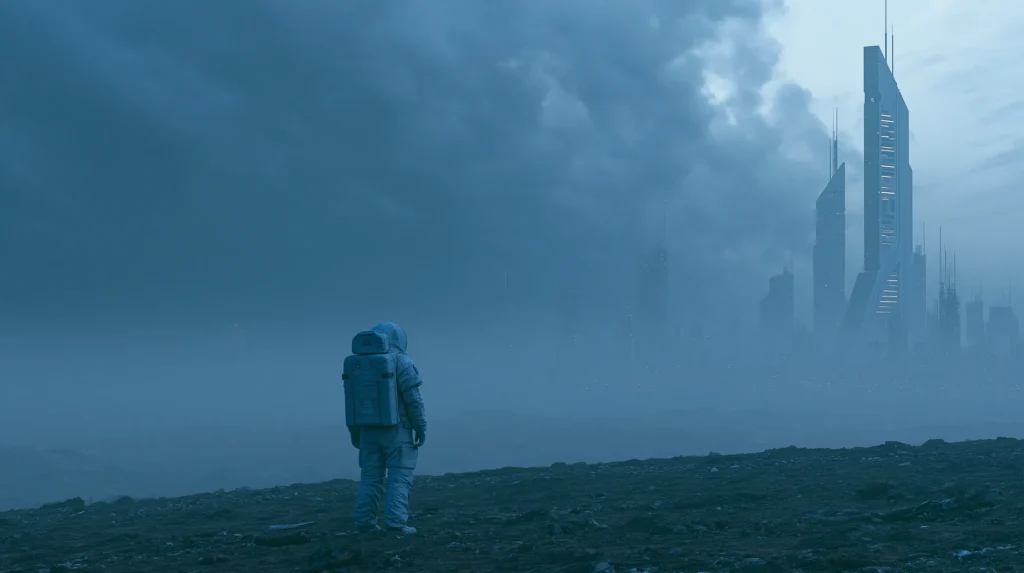
Even in AI filmmaking, the camera matters.
Not the physical camera, but the idea of the camera.
Where is the viewer standing? Are we watching from above, like fate? Are we close to the character, sharing their fear? Are we moving with them, trapped inside the moment? Are we far away, seeing them as a small figure inside a much larger world?
These choices shape emotion.
A low angle can make a character feel powerful. A high angle can make them feel vulnerable. A handheld feeling can make a scene feel unstable. A slow push-in can make silence feel dangerous.
AI films need this language.
A recent paper called FilMaster: Bridging Cinematic Principles and Generative AI for Automated Film Generation makes this point from a technical angle. It argues that many film generation systems struggle to apply cinematic principles, especially diverse camera language and cinematic rhythm.
That is exactly why AI filmmaking cannot be reduced to image generation.
The image is only one part of the film.
Rhythm gives images life
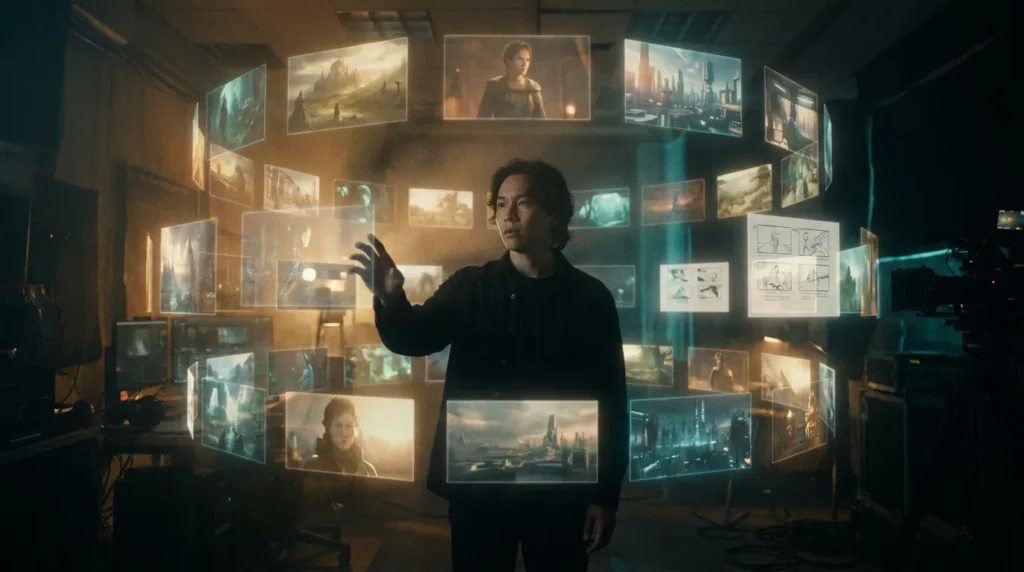
A beautiful image can die if it stays too long.
It can also disappear too quickly.
Rhythm is one of the hidden forces of cinema. It controls how the viewer breathes with the film. It decides when a moment should be fast, slow, violent, quiet, confusing or clear.
In a trailer, rhythm is even more important.
A good trailer knows when to build mystery. It knows when to create scale. It knows when to give the viewer a face, a threat, a line of dialogue, a silence or a final image that stays in the mind.
AI trailers can look impressive very quickly. But without rhythm, they become a collection of dramatic shots.
A strong AI trailer should feel like a promise.
It should make the viewer feel that there is a story waiting behind the images.
Worldbuilding makes images feel connected
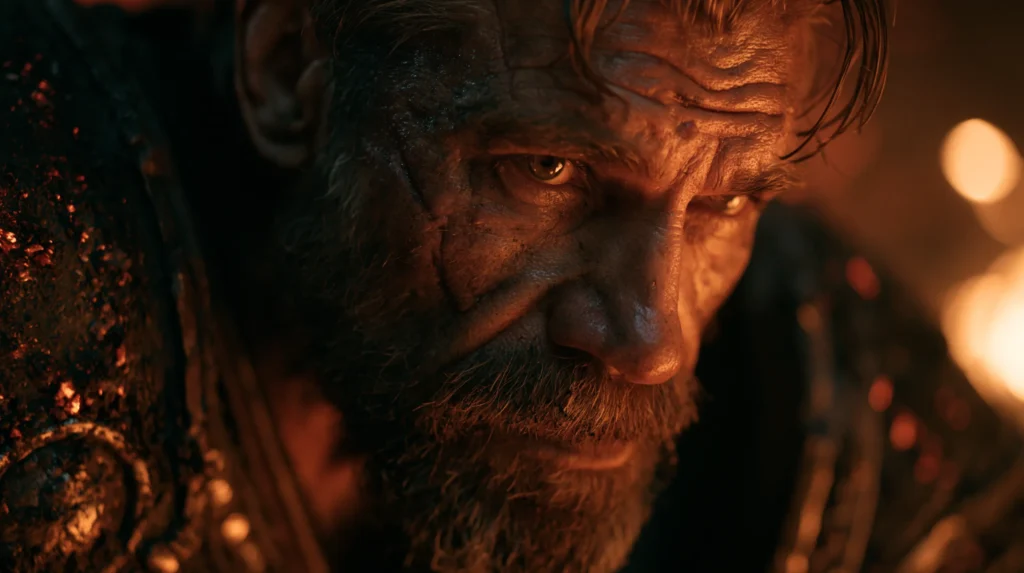
One of the best ways to make AI films stronger is to build the world before chasing the shot.
A world gives images rules.
It tells us what kind of architecture exists there. What people wear. What they fear. What they worship. What technology they use. What has been lost. What kind of weather belongs to that place. What colors feel natural inside that story.
Without worldbuilding, AI scenes can feel random.
One shot may look like dark fantasy. The next may feel like science fiction. A character may change mood, costume or identity from scene to scene. The result can still look beautiful, but the world does not feel real.
Worldbuilding creates continuity.
It helps every image feel like part of the same universe.
A ruined kingdom, a frozen moon or a futuristic city should not feel like a backdrop. It should feel like a place with memory.
Characters need more than design
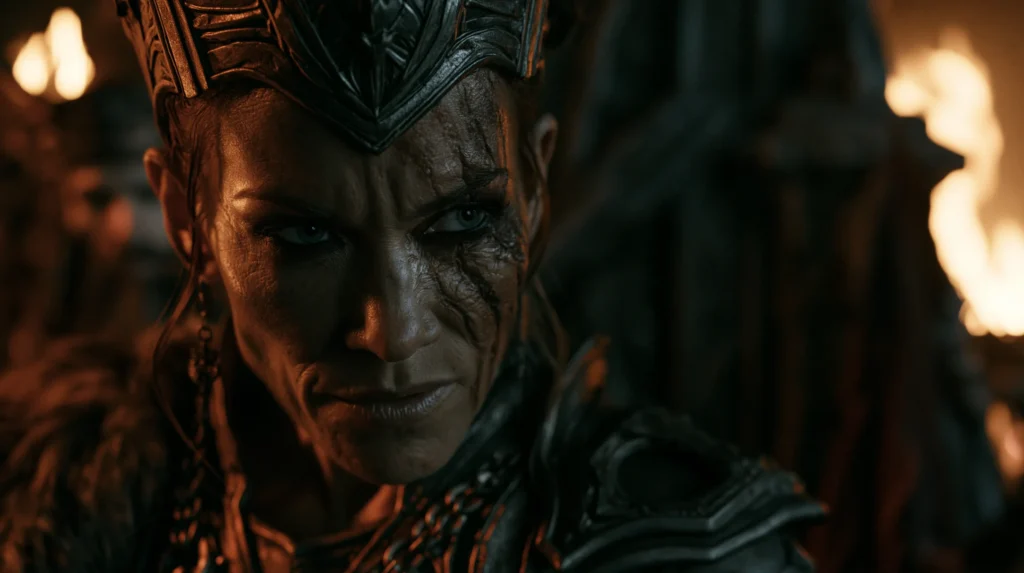
AI can create striking characters.
A queen in black armor. A pilot with a damaged helmet. A child walking through a city of machines. A creature made of bone and shadow.
Design matters, but character is more than design.
The viewer needs to sense desire, fear, conflict or mystery. A character should feel like they existed before the shot began and will continue to exist after the shot ends.
That is hard to create with visuals alone.
A face can be beautiful and still feel empty. A costume can be detailed and still tell us nothing. A character can look iconic and still have no emotional pull.
Strong AI filmmaking needs character intention.
The audience should feel that the character wants something, remembers something or is hiding something.
That feeling gives the image weight.
Technology is moving fast, but taste still leads
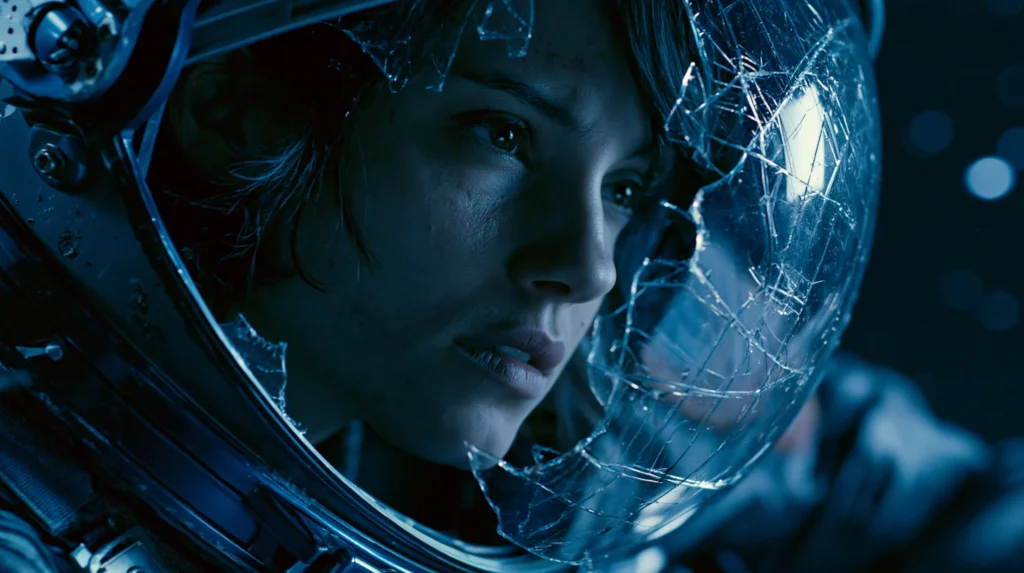
Generative AI tools are improving quickly.
The Runway AI Festival is already in its fourth annual edition, and it has grown from a festival focused on AI films into a broader celebration of artists working across film, design, new media, fashion, advertising and gaming.
Research is moving quickly too. The paper Generative AI for Film Creation: A Survey of Recent Advances describes how generative AI is being used across film creation, including character animation, aesthetic styling and 3D asset generation.
But better tools do not automatically create better films.
They create more possibilities.
The difference still comes from taste.
Taste decides when an image is too much. Taste knows when a simple shot is stronger than a complex one. Taste understands when a scene needs silence instead of music, shadow instead of detail, restraint instead of spectacle.
In AI filmmaking, taste is not a luxury.
It is the thing that separates cinematic work from visual noise.
The future belongs to directed imagination
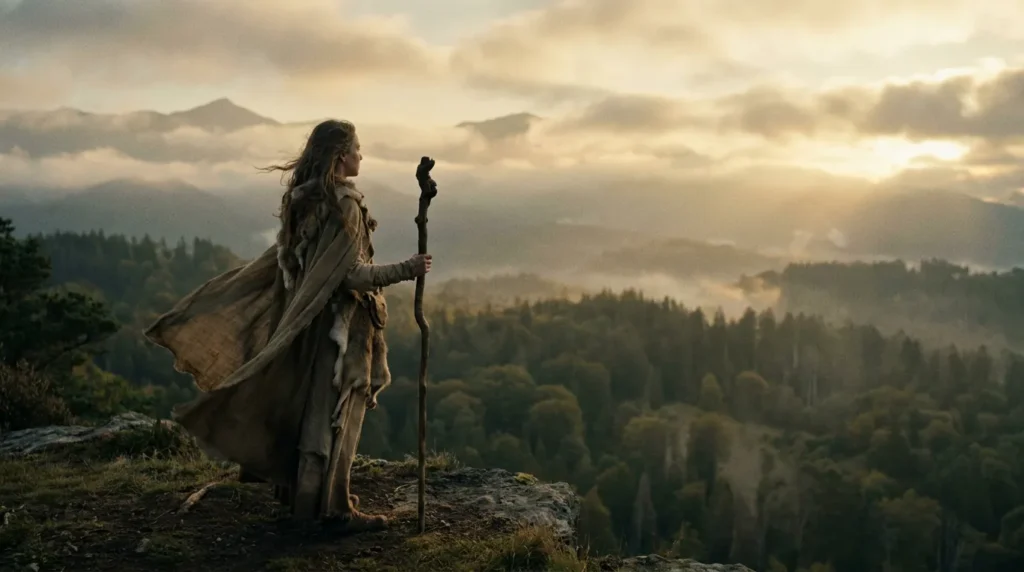
AI films need more than beautiful images because cinema has never been only about beauty.
Cinema is about attention.
It tells the viewer where to look, what to feel, what to fear, what to remember and what to imagine after the screen goes dark.
AI can help creators reach images that once felt impossible. It can open the door to new worlds, new myths and new forms of independent filmmaking. But the value of those images depends on the mind behind them.
The future of AI filmmaking will not be defined by who can generate the most impressive frame.
It will be defined by who can shape those frames into meaning.
At Fable Forge, we believe AI filmmaking is strongest when it is treated as cinema first.
Not as a shortcut.
Not as decoration.
Not as a gallery of beautiful shots.
As a way to forge worlds, characters and stories with intention.

Leave a Comment